Carbon steel grades for flanges, fittings & pipe
Carbon steel is iron with up to about 0.35 % carbon and 1–1.6 % manganese, and no deliberate chromium, nickel or molybdenum. It is the default material for piping in water, steam, oil, gas and general process service from about −29 °C up to roughly 425 °C.
What carbon steel is
Each product form has its own ASTM specification with near-identical chemistry: A105 for forged flanges and fittings, A234 WPB for wrought butt-weld fittings, A106 and A53 for pipe, API 5L for line pipe and A216 WCB for valve castings. Choosing matched grades keeps strength, weldability and the ASME B16.5 / B16.34 pressure–temperature group consistent across a line.
- Carbon 0.35 % max (forgings) or 0.30 % max (pipe and fittings)
- Manganese 0.29–1.35 % depending on the specification
- Residual Cr, Ni, Mo, Cu and V capped (typically total 1.00 % max)
- No alloying for corrosion resistance — protection comes from coatings, linings or corrosion allowance
Key properties
| Typical minimum yield | 240–275 MPa |
|---|---|
| Typical minimum tensile | 415–485 MPa |
| Lower design temperature | −29 °C (impact-tested LTCS grades below this) |
| Upper design temperature | About 425 °C for continuous service (graphitisation above) |
| ASME B16.5 material group | 1.1 (A105, A216 WCB) / 1.2 (A106 Gr C) |
Carbon steel grades compared
Chemistry and minimum room-temperature properties from the governing ASTM / ASME / API specifications. Open any grade for its full data sheet and PDF.
| Grade | Form | UNS | Cr% | Ni% | Mo% | C% | YieldMPa min | TensileMPa min |
|---|---|---|---|---|---|---|---|---|
| ASTM A105 | Forged flanges & fittings | K03504 | 0.30 max | 0.40 max | 0.12 max | 0.35 max | 250 | 485 |
| ASTM A106 Gr.B | Seamless pipe | K03006 | 0.40 max | 0.40 max | 0.15 max | 0.30 max | 240 | 415 |
| ASTM A234 WPB | Wrought butt-weld fittings | K03006 | 0.40 max | 0.40 max | 0.15 max | 0.30 max | 240 | 415 |
| ASTM A53 Gr.B (seamless) | Seamless pipe (Type S) | K03005 | 0.40 max | 0.40 max | 0.15 max | 0.30 max | 240 | 415 |
| API 5L Gr.B PSL1 | Seamless line pipe | — | 0.50 max | 0.50 max | 0.15 max | 0.28 max | 245 | 415 |
| ASTM A216 WCB | Steel castings | J03002 | 0.50 max | 0.50 max | 0.20 max | 0.30 max | 250 | 485 |
| ASTM A106 Grade C | Seamless pipe | K03501 | 0.40 max | 0.40 max | 0.15 max | 0.35 max | 275 | 485 |
Reference information compiled from the published standard for convenience. It does not replace the current edition of the governing standard, which takes precedence. Verify critical dimensions and properties before design, purchase or fabrication. Teshi Engineers & Sales Promoters (P) Ltd accepts no liability for errors or omissions.
Specifications by product form
| Product form | Grades |
|---|---|
| Forged flanges & fittings | ASTM A105 |
| Seamless pipe | ASTM A106 Gr.B, ASTM A106 Grade C |
| Wrought butt-weld fittings | ASTM A234 WPB |
| Seamless pipe (Type S) | ASTM A53 Gr.B (seamless) |
| Seamless line pipe | API 5L Gr.B PSL1 |
| Steel castings | ASTM A216 WCB |
Where carbon steel is used
- Oil and gas gathering and plant piping
- Steam, condensate and boiler feed water
- Cooling water and fire water (with lining or allowance)
- Refinery utility and hydrocarbon lines
- Structural and general fabrication
Welding and fabrication
Carbon steel welds easily without preheat in normal thicknesses when carbon equivalent is controlled. A105 is often supplied normalised (A105N) for better toughness and is commonly impact-tested on request. For sour service, NACE MR0175 / ISO 15156 hardness limits (22 HRC max) apply.
FAQ
Carbon steel: common questions
What is the difference between A105 and A105N?
A105N is A105 supplied in the normalised condition. The chemistry and minimum strength are the same; normalising refines the grain and improves toughness, so many project specifications call for A105N.
Which carbon steel grades go together in one piping system?
A typical matched set is A106 Gr B pipe, A234 WPB butt-weld fittings, A105 flanges and forged fittings, A216 WCB valves and A193 B7 / A194 2H bolting.
Is carbon steel suitable below −29 °C?
No. Below −29 °C use impact-tested low-temperature carbon steel — A350 LF2 flanges, A420 WPL6 fittings and A333 Gr 6 pipe.
Carbon steel products from Teshi Group
ASTM A105 / A105N Carbon Steel Flanges
Grades, sizes and standards we supply
ViewMaterial productsASTM A234 WPB Carbon Steel Pipe Fittings
Grades, sizes and standards we supply
ViewMaterial productsCarbon Steel, Low-Temperature & High-Yield Pipeline Flanges
Grades, sizes and standards we supply
ViewOEM manufacturerIndustrial Flanges
ViewOEM manufacturerButt Weld Fittings
ViewStockist & supplierIndustrial Pipes
ViewOEM manufacturerIndustrial Valves
ViewIBR products in carbon steel
All IBR products →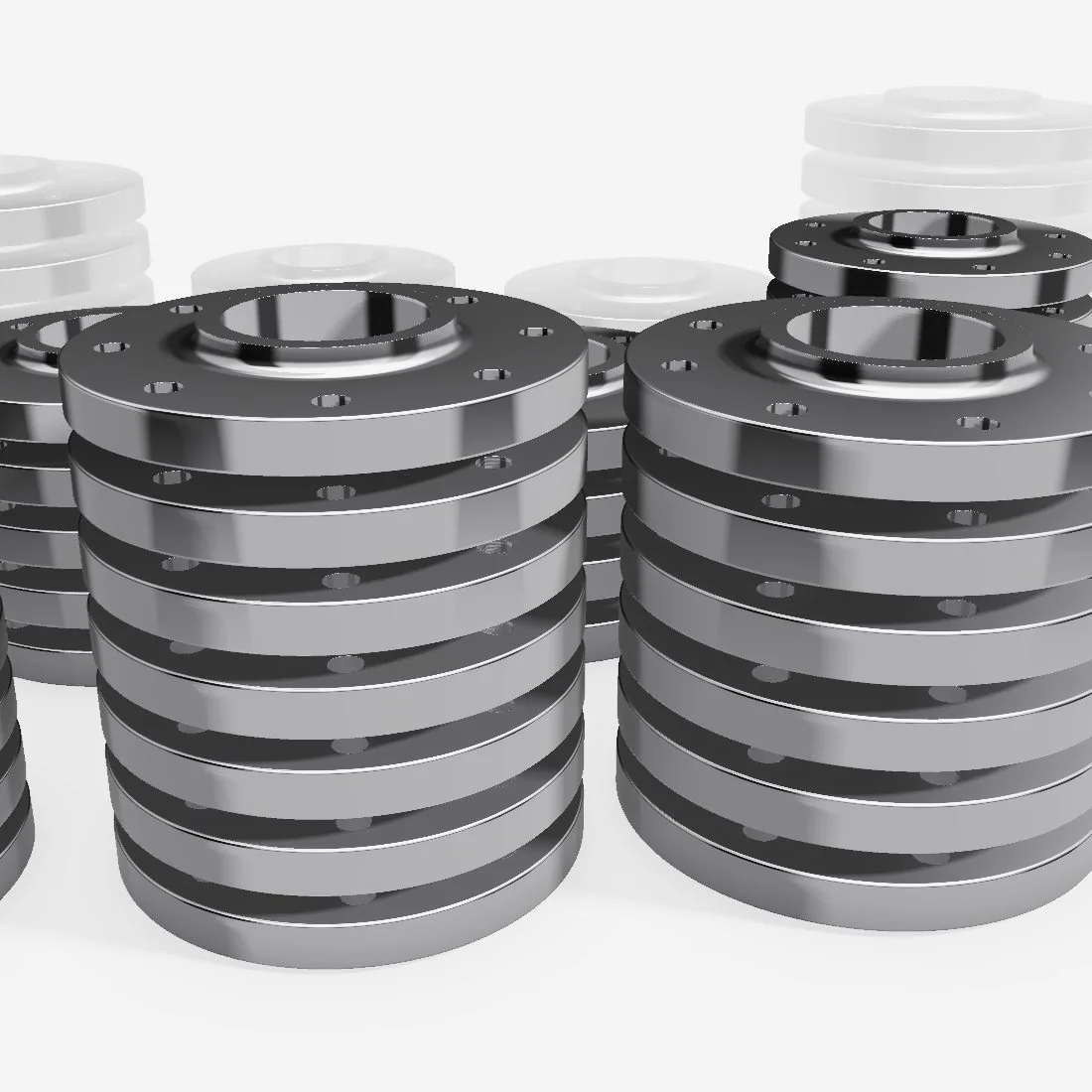
Ready to build to spec?
Share your drawing, bill of materials or technical requirements with the Teshi team.