Super duplex stainless steel grades — 2507, F53, F55, S32750, S32760
Super duplex stainless steels raise chromium to 25 %, molybdenum to 3.5–4 % and nitrogen to about 0.25 %, giving a PREN above 40. That makes them resistant to pitting and crevice corrosion in warm seawater, while keeping a minimum yield of 550 MPa.
What super duplex stainless steel is
The main grades are UNS S32750 (2507, A182 F53), UNS S32760 (A182 F55, with added tungsten and copper) and UNS S32550 (Alloy 255, A182 F61, with copper for acid service). Cast equivalents are A995 Grade 5A and 6A.
- Chromium 24–26 %, nickel 6–8 %, molybdenum 3–5 %
- Nitrogen 0.20–0.32 %
- S32760 adds 0.5–1 % tungsten and copper; its PREN must be 40 min
- Solution annealed and water quenched
Key properties
| PREN (Cr + 3.3Mo + 16N) | ≥ 40 (S32760: Cr + 3.3(Mo + 0.5W) + 16N ≥ 40) |
|---|---|
| Minimum yield | 550 MPa |
| Minimum tensile | 750–800 MPa |
| Service temperature range | About −50 °C to 250 °C |
| Typical hardness limit | 310 HBW max (28 HRC for sour service) |
Super duplex stainless steel grades compared
Chemistry and minimum room-temperature properties from the governing ASTM / ASME / API specifications. PREN = Cr + 3.3Mo + 16N using specification minimums. Open any grade for its full data sheet and PDF.
| Grade | Form | UNS | Cr% | Ni% | Mo% | N% | PRENmin | YieldMPa min | TensileMPa min |
|---|---|---|---|---|---|---|---|---|---|
| ASTM A182 F61 (Alloy 255) | Forged flanges & fittings | S32550 | 24.0–27.0 | 4.5–6.5 | 2.9–3.9 | 0.10–0.25 | 35 | 550 | 750 |
| ASTM A182 F53 (Super Duplex 2507) | Forged flanges & fittings | S32750 | 24.0–26.0 | 6.0–8.0 | 3.0–5.0 | 0.24–0.32 | 38 | 550 | 800 |
| ASTM A182 F55 (Super Duplex S32760) | Forged flanges & fittings | S32760 | 24.0–26.0 | 6.0–8.0 | 3.0–4.0 | 0.20–0.30 | 38 | 550 | 750 |
| ASTM A815 WPS32750 | Wrought butt-weld fittings | S32750 | 24.0–26.0 | 6.0–8.0 | 3.0–5.0 | 0.24–0.32 | 38 | 550 | 800 |
| ASTM A815 WPS32760 | Wrought butt-weld fittings | S32760 | 24.0–26.0 | 6.0–8.0 | 3.0–4.0 | 0.20–0.30 | 38 | 550 | 750 |
| ASTM A790 UNS S32750 | Seamless & welded pipe | S32750 | 24.0–26.0 | 6.0–8.0 | 3.0–5.0 | 0.24–0.32 | 38 | 550 | 800 |
| ASTM A790 UNS S32760 | Seamless & welded pipe | S32760 | 24.0–26.0 | 6.0–8.0 | 3.0–4.0 | 0.20–0.30 | 38 | 550 | 750 |
| ASTM A995 Grade 5A (CE3MN) | Super duplex steel castings | J93404 | 24.0–26.0 | 6.0–8.0 | 4.0–5.0 | 0.10–0.30 | 39 | 515 | 690 |
| ASTM A995 Grade 6A (CD3MWCuN) | Super duplex steel castings | J93380 | 24.0–26.0 | 6.5–8.5 | 3.0–4.0 | 0.20–0.30 | 38 | 450 | 690 |
Reference information compiled from the published standard for convenience. It does not replace the current edition of the governing standard, which takes precedence. Verify critical dimensions and properties before design, purchase or fabrication. Teshi Engineers & Sales Promoters (P) Ltd accepts no liability for errors or omissions.
Specifications by product form
| Product form | Grades |
|---|---|
| Forged flanges & fittings | ASTM A182 F61 (Alloy 255), ASTM A182 F53 (Super Duplex 2507), ASTM A182 F55 (Super Duplex S32760) |
| Wrought butt-weld fittings | ASTM A815 WPS32750, ASTM A815 WPS32760 |
| Seamless & welded pipe | ASTM A790 UNS S32750, ASTM A790 UNS S32760 |
| Super duplex steel castings | ASTM A995 Grade 5A (CE3MN), ASTM A995 Grade 6A (CD3MWCuN) |
Where super duplex stainless steel is used
- Seawater injection and firewater ring mains
- Subsea manifolds and umbilical connections
- Desalination high-pressure RO piping
- Offshore produced-water and cooling systems
- Flue-gas scrubbers and mining autoclaves
Welding and fabrication
Weld with 2594 / 25.10.4.L super duplex consumables at controlled heat input and interpass below 100–150 °C. Typical QA: ferrite count (35–55 %), Charpy at −46 °C, ASTM G48 Method A pitting test at 40–50 °C, and microstructure check for intermetallics per A923.
FAQ
Super duplex stainless steel: common questions
What is the difference between F53 and F55?
F53 is UNS S32750 (2507). F55 is UNS S32760, which adds tungsten and copper and requires PREN ≥ 40. They have the same minimum yield (550 MPa); F53 has a higher minimum tensile (800 vs 750 MPa).
Is super duplex better than duplex?
For seawater and warm chlorides, yes — PREN above 40 against about 35, and higher strength. It costs more and needs tighter welding control.
Is super duplex suitable for seawater?
Yes. It is one of the standard materials for seawater and firewater systems, typically up to about 20–30 °C for crevice-free design without chlorination limits being exceeded.
Super duplex products from Teshi Group
Super Duplex 2507 (F53) & UNS S32760 (F55) Flanges & Fittings
Grades, sizes and standards we supply
ViewMaterial productsSuper Duplex 2507 / S32760 (F53 / F55) Flanges
Grades, sizes and standards we supply
ViewMaterial productsSuper Duplex 2507 / S32760 Pipe Fittings
Grades, sizes and standards we supply
ViewOEM manufacturerIndustrial Flanges
ViewOEM manufacturerButt Weld Fittings
ViewStockist & supplierIndustrial Pipes
ViewOEM manufacturerIndustrial Valves
View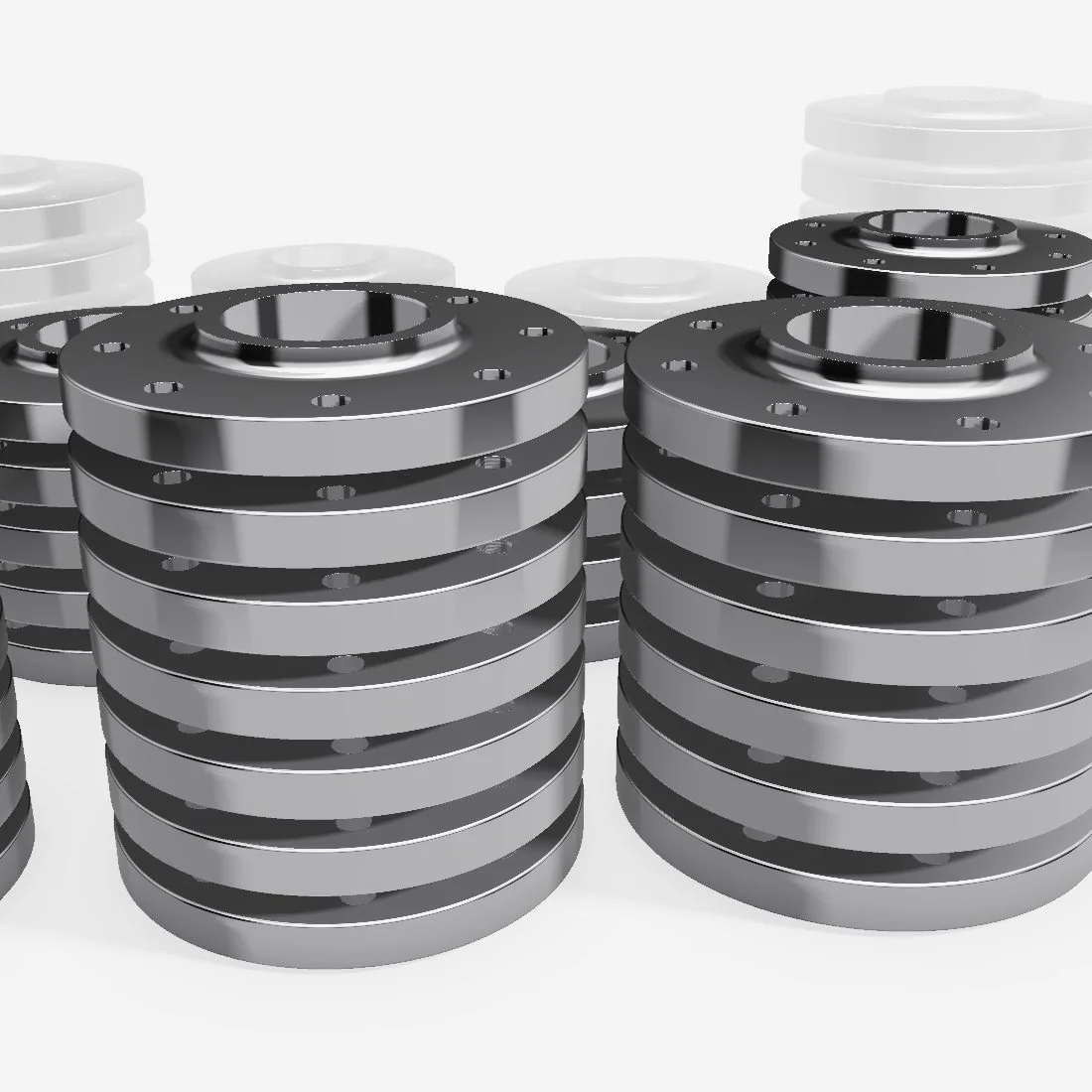
Ready to build to spec?
Share your drawing, bill of materials or technical requirements with the Teshi team.