SS 304 / 304L Pipe Fittings
Teshi Group manufactures SS 304 / 304L pipe fittings (ASTM A403 WP304 / WP304L, A182 F304 / F304L) as an OEM in India — butt weld fittings to ASME B16.9 and forged socket weld and threaded fittings to ASME B16.11, with heat-number traceability on every piece.
Austenitic stainless steels are the everyday choice for corrosive process lines, with grades tuned for low carbon (L), molybdenum for chlorides (316, 317L), stabilisation for high temperature (321, 347) and oxidation resistance (310).
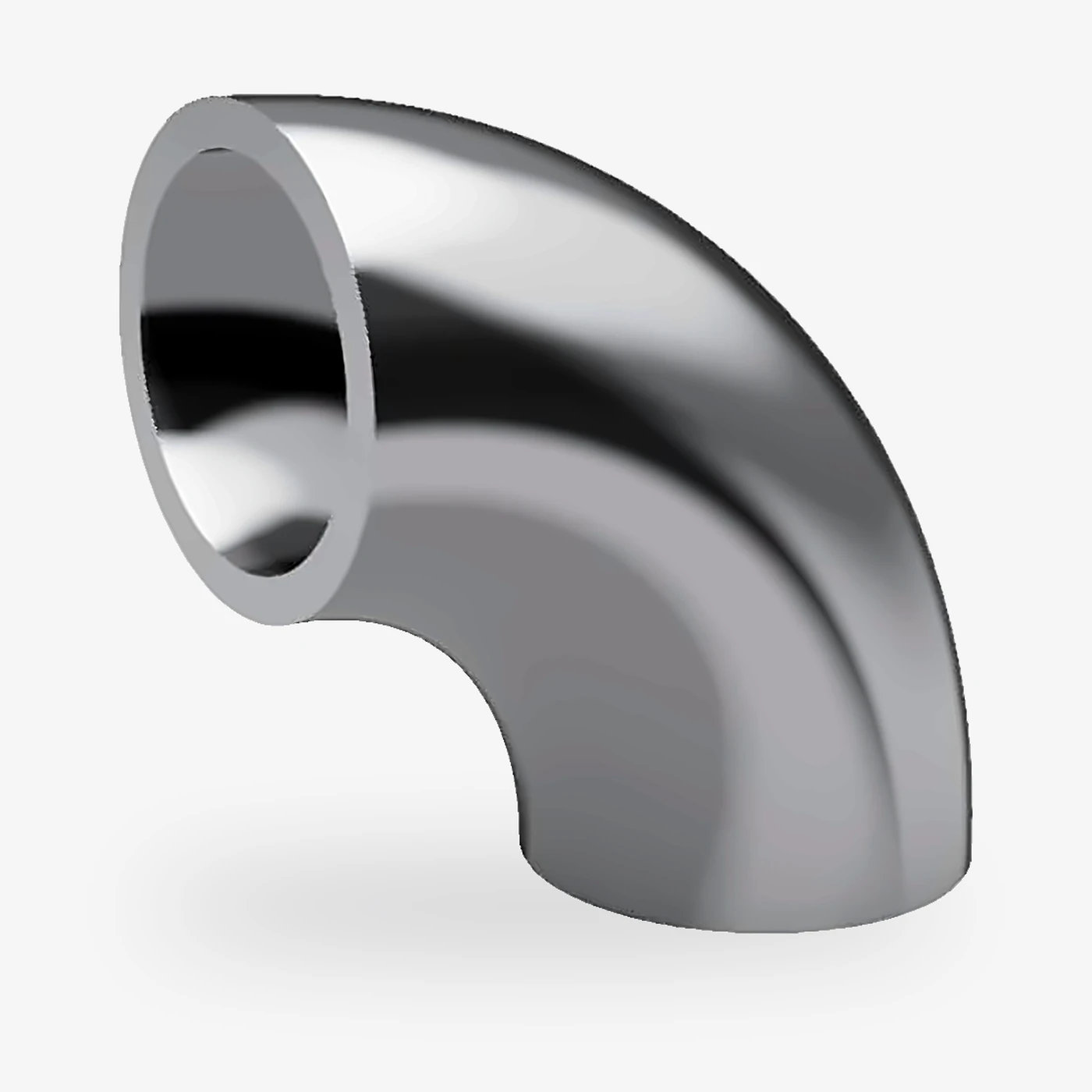
SS 304 / 304L pipe fittings at a glance
| Material | SS 304 / 304L |
|---|---|
| Specification | Butt weld: ASTM A403 WP304 / WP304L · Forged: ASTM A182 F304 / F304L |
| UNS / W.Nr. | S30400 / S30403 / 1.4301 / 1.4306 |
| Sizes | Butt weld NPS ½"–48", Sch 5S–XXS · Forged NPS ⅛"–4" |
| Pressure class | Wall to pipe schedule (B16.9) · Class 2000, 3000, 6000, 9000 (B16.11) |
| Facing / ends | Bevelled ends to ASME B16.25; socket weld and NPT threaded ends |
| Certification | EN 10204 3.1 standard · 3.2 with third-party inspection · IBR on request |
| Testing | PMI, hardness, dimensional; UT, IGC, impact and ferrite as specified |
SS 304 / 304L chemistry and mechanical properties
Chemical composition of SS 304 / 304L (weight %, maximum unless a range)
| Grade | C | Mn | Si | Cr | Ni |
|---|---|---|---|---|---|
| 304 / 304L | 0.08 / 0.030 | 2.00 | 1.00 | 18.0–20.0 | 8.0–11.0 / 8.0–12.0 |
Mechanical properties of SS 304 / 304L (minimum, room temperature)
| Grade | Tensile strength | Yield strength (0.2 %) | Elongation | Note |
|---|---|---|---|---|
| 304 / 304L | 515 MPa (75 ksi) | 205 MPa (30 ksi) | 30 % | 304L: 485 / 170 MPa |
Matching specifications by product form
| Grade | Forged flanges & fittings | Butt weld fittings | Plate | Pipe |
|---|---|---|---|---|
| 304 / 304LUNS S30400 / S30403 · W.Nr. 1.4301 / 1.4306 | ASTM A182 F304 / F304L | ASTM A403 WP304 / WP304L | ASTM A240 | ASTM A312 |
Limits and minimums from the governing ASTM / ASME specifications, summarised for convenience; the current edition takes precedence.
Pressure rating
Butt weld fittings carry the same pressure rating as straight seamless pipe of the same material and wall thickness, so the fitting schedule is matched to the line pipe (ASME B16.9). Forged socket weld and threaded fittings are rated by class — 3000 and 6000 for socket weld, 2000, 3000 and 6000 for threaded — per ASME B16.11.
Types we manufacture
Dimension charts
Where SS 304 / 304L is used
- Chemical, fertiliser and pharmaceutical process piping
- Food, water and utility lines
- Refinery hydrotreater and high-temperature lines (321, 347)
- Furnace and kiln piping (310S)
- Cryogenic service
Testing & certification
- Solution annealed
- Intergranular corrosion test to ASTM A262 Practice E when specified
- PMI and dimensional inspection
- EN 10204 3.1 certificate
Related materials
FAQ
SS 304 / 304L pipe fittings: common questions
What specification covers SS 304 / 304L pipe fittings?
SS 304 / 304L butt weld fittings are made to ASTM A403 WP304 / WP304L with dimensions to ASME B16.9; forged socket weld and threaded fittings are made to ASTM A182 F304 / F304L with dimensions to ASME B16.11.
What is the chemical composition of 304 / 304L?
304 / 304L (UNS S30400 / S30403): C 0.08 / 0.030, Mn 2.00, Si 1.00, Cr 18.0–20.0, Ni 8.0–11.0 / 8.0–12.0 (weight %; single values are maximums).
What are the minimum mechanical properties of 304 / 304L?
Tensile strength 515 MPa (75 ksi), yield strength 205 MPa (30 ksi), elongation 30 %.
Is Teshi Group a manufacturer of SS 304 / 304L pipe fittings in India?
Yes. Teshi Group has manufactured flanges and fittings in India since 1971 and is ISO 9001:2015 certified and IBR approved. Every SS 304 / 304L piece is hard-stamped with its heat number and supplied with an EN 10204 3.1 certificate; 3.2 with third-party inspection on request.
What does the L in 304L and 316L mean?
L grades have carbon limited to 0.030 % to avoid chromium carbide precipitation during welding, which protects the weld zone from intergranular corrosion.
When should 321 or 347 be used instead of 304L?
321 (titanium-stabilised) and 347 (niobium-stabilised) resist sensitisation during long service at roughly 425–850 °C, so they are used in refinery hydrotreaters and high-temperature lines.
Ready to build to spec?
Share your drawing, bill of materials or technical requirements with the Teshi team.