OEM manufacturer ASTM A194 · ASME B18.2.2 · ASTM A563
Heavy Hex Nuts — ASTM A194
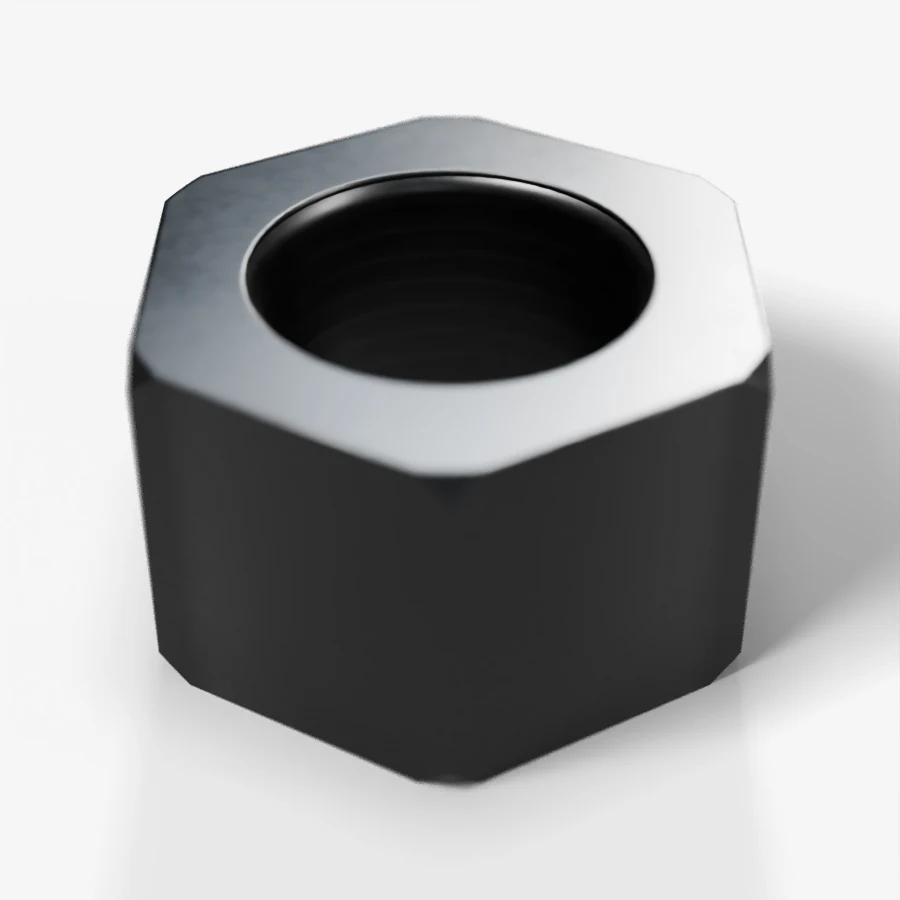
Heavy hex nuts are thick, wide hexagon nuts used in pairs on stud bolts for flanges and pressure equipment. Teshi Group manufactures ASTM A194 heavy hex nuts in carbon, alloy and stainless grades to ASME B18.2.2 dimensions, supplied loose or as stud bolt sets.
Also called: A194 2H nuts, heavy hexagon nuts, flange bolt nuts, 2H nuts, 8M nuts
What are Heavy Hex Nuts?
A heavy hex nut has a larger width across flats and greater thickness than a standard hex nut of the same thread size. The extra thread engagement and bearing area let it carry the full load of high-strength studs without stripping. ASTM A194 covers nuts for high-pressure and/or high-temperature bolting: Grade 2H (quenched and tempered carbon steel) is the usual partner for A193 B7 studs, 2HM for B7M, Grade 7 for alloy studs and low-temperature L7, and Grades 8 and 8M for stainless B8 and B8M studs.
Key features
- ASTM A194 grades 2H, 2HM, 7, 7M, 7L, 8, 8M
- Dimensions to ASME B18.2.2 heavy hex; metric heavy hex on request
- 2HM and 7M nuts 100% hardness tested for sour-service limits
- Grade 7L with Charpy impact test for low-temperature service
- Coatings: PTFE/Xylan, hot-dip galvanised (oversize tapped), zinc
Specification
| Supply | OEM manufacturer — Teshi Group, India, India |
|---|---|
| Standard | ASTM A194 (material), ASME B18.2.2 (heavy hex dimensions) |
| Carbon steel | Grade 2H (quenched and tempered, 24–38 HRC); Grade 2HM (159–237 HB) |
| Alloy steel | Grade 7 (quenched and tempered, 24–38 HRC), 7M (159–237 HB), 7L (impact tested) |
| Stainless steel | Grade 8 (304), Grade 8M (316); 8T, 8C, 8F on request |
| Grade 4 | Removed from ASTM A194 in 2017; Grade 7 is the substitute. Supplied as SA-194 Gr 4 only where the order requires it |
| Threads | UNC / 8UN class 2B; ISO metric |
| Coatings | Plain, PTFE/Xylan (fluoropolymer), hot-dip galvanised, zinc / zinc-nickel electroplated, as ordered |
| Testing | Proof load, hardness; PMI on stainless grades; impact test for 7L |
| Documents | EN 10204 3.1 mill test certificate (3.2 / third-party inspection when specified), dimensional inspection report |
Applications
- Flange stud bolt sets in oil and gas piping
- Valve bonnet and body bolting
- Heat exchanger channel covers
- Sour-service bolting (2HM / 7M)
- Low-temperature bolting with A320 L7 studs
Technical data sheets
Dimensions & weights
FAQ
Heavy Hex Nuts: common questions
Which A194 nut grade matches which stud?
Common pairings are B7 with 2H, B7M with 2HM, A320 L7 with Grade 7, B8 with Grade 8 and B8M with Grade 8M. Follow the piping material specification where it differs.
Is A194 Grade 4 still available?
ASTM removed Grade 4 from A194 in 2017 and named Grade 7 as the substitute. Some ASME SA-194 editions still list it, so it can be supplied where a project specifically requires it.
What does the M in 2HM mean?
The M grades (2HM, 7M) have a lower maximum hardness of 237 HB and every nut is hardness tested. They are used with B7M studs where hardness limits apply, such as sour service.
How is a heavy hex nut different from a regular hex nut?
For the same thread, a heavy hex nut is wider across flats and thicker, giving more bearing area and thread engagement. ASME B18.2.2 sets both sizes.
Need a size or grade not listed here?
Our engineering team manufactures against your drawing or datasheet, with dimensional sign-off before dispatch.
Send us your specificationTraceability
From mill heat to your site
- 01
Approved mill material
Received against the mill certificate; heat number registered.
- 02
Forging & machining
Heat number carried through every stage in our Indian works.
- 03
PMI, dimensional & NDT
Every lot inspected to the governing standard; TPI witness on request.
- 04
Stamped & certified dispatch
Hard-stamped pieces with EN 10204 3.1 / 3.2 certificates.
Quick RFQ
Quote for Heavy Hex Nuts in 24–48 hours
More fasteners
All fastenersSocket Head Cap Screws
ASME B18.3 · ISO 4762
View productFastenersCarriage Bolts
ASME B18.5 · DIN 603
View productFastenersSquare Head Bolts & Square Nuts
ASME B18.2.1 · ASME B18.2.2
View productFastenersCoupling Nuts
ASME B18.2.2 · DIN 6334
View productFastenersLock Nuts
ISO 7040 · DIN 985
View productFastenersFlat & Spring Washers
ASME B18.22.1 · ASME B18.21.1
View product