Stockist & supplier ASME B16.21 · EN 1514-1
Rubber Gaskets — EPDM, Neoprene, Nitrile & Viton
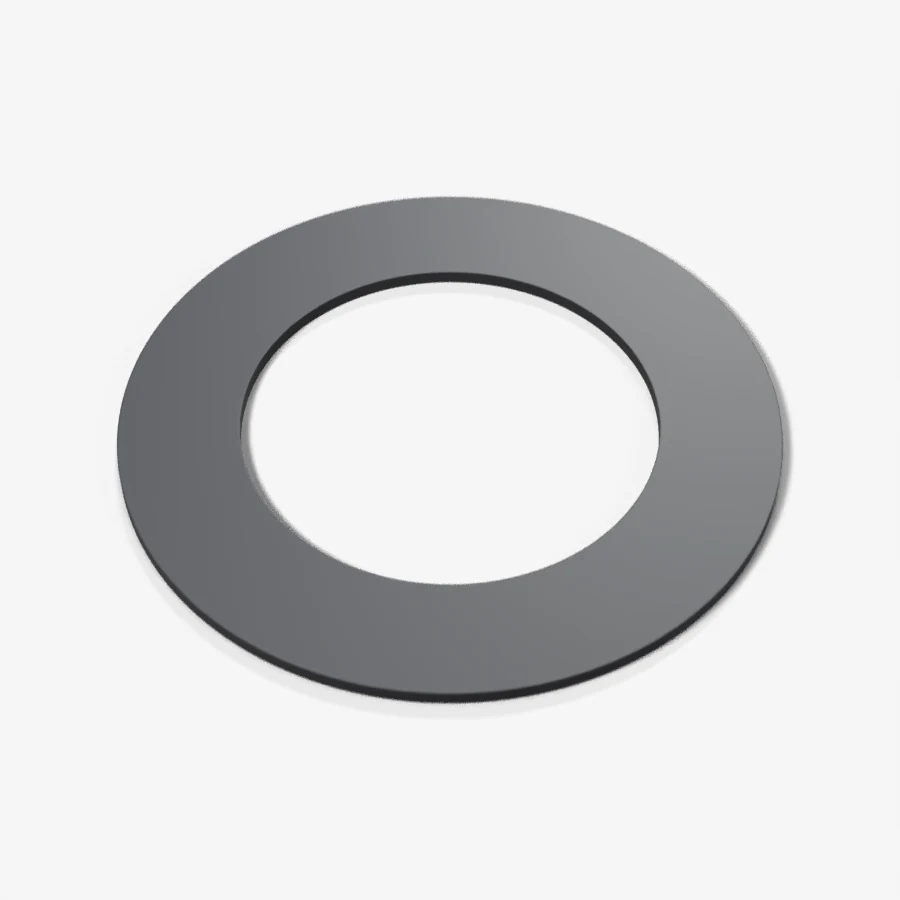
Rubber gaskets are soft elastomer gaskets for low-pressure flanges and equipment. Teshi Group stocks and supplies EPDM, neoprene, nitrile and Viton (FKM) ring and full-face gaskets to ASME B16.21 and EN 1514-1 dimensions.
Also called: EPDM gasket, neoprene gasket, nitrile gasket, NBR gasket, Viton gasket, FKM gasket, elastomer gasket
What is a Rubber Gasket?
Rubber gaskets seal at low bolt load because the elastomer conforms easily to the flange face. That makes them suitable for flat face, cast iron, plastic and lined flanges where high bolt load would crack or distort the flange. The polymer is chosen by fluid and temperature: EPDM for water and steam, nitrile for oils and fuels, neoprene for general and marine duty, Viton for aggressive chemicals and higher temperatures. Rubber gaskets are limited to low pressures and moderate temperatures.
Key features
- EPDM, neoprene (CR), nitrile (NBR), Viton (FKM); natural rubber and silicone on request
- Ring and full-face gaskets, with or without fabric insertion
- Dimensions to ASME B16.21 and EN 1514-1; cut to drawing
- Thickness 1.5 mm to 6 mm
- Shore A hardness to order
Specification
| Supply | Stockist & supplier — Teshi Group, India, India |
|---|---|
| Standard | ASME B16.21 (dimensions), EN 1514-1 (PN flanges) |
| EPDM | About −50 °C to +150 °C; water, steam, weather; not for oils or fuels |
| Neoprene (CR) | About −40 °C to +100 °C; general, marine, refrigerants, mild oil splash |
| Nitrile (NBR) | About −40 °C to +100 °C; petroleum oils, fuels, hydraulic fluids; not for steam |
| Viton (FKM) | About −20 °C to +200 °C; fuels, acids, solvents, hot hydrocarbons |
| Types | Ring, full face, fabric (cloth) inserted |
| Documents | Manufacturer's test certificate, dimensional inspection report |
Applications
- Water supply, cooling and firewater lines
- Lined and plastic piping flanges
- Lube oil and hydraulic systems (NBR)
- Chemical transfer lines (Viton)
- Manholes, inspection covers and tanks
FAQ
Rubber Gasket: common questions
Which rubber gasket is used for oil?
Nitrile (NBR) is the usual choice for petroleum oils and fuels, and Viton (FKM) for hot hydrocarbons and aggressive fuels. EPDM should not be used in oil, as it swells and breaks down.
Which rubber gasket is used for water and steam?
EPDM handles water, low-pressure steam and outdoor weathering well, which makes it the usual choice for water and utility lines. Nitrile is not suited to steam or hot water above about 70 °C.
Can rubber gaskets be used on Class 300 flanges?
Rubber gaskets are generally limited to low-pressure service, such as Class 150 and PN 10–16. For higher pressure use CNAF, PTFE or spiral wound gaskets.
What is a cloth-inserted rubber gasket?
It is a rubber gasket with one or more layers of fabric moulded inside. The fabric reduces extrusion and tearing under bolt load, which helps on wider flange faces and manhole covers.
Need a size or grade not listed here?
We source against your specification from approved mills, with mill test certificates and inspection before dispatch.
Send us your specificationTraceability
From mill heat to your site
- 01
Approved mill material
Received against the mill certificate; heat number registered.
- 02
Forging & machining
Heat number carried through every stage in our Indian works.
- 03
PMI, dimensional & NDT
Every lot inspected to the governing standard; TPI witness on request.
- 04
Stamped & certified dispatch
Hard-stamped pieces with EN 10204 3.1 / 3.2 certificates.
Quick RFQ
Quote for Rubber Gasket in 24–48 hours
More gaskets & seals
All gaskets & sealsPTFE Gasket
ASME B16.21 · EN 1514-1
View productGaskets & SealsSpiral Wound Gasket
ASME B16.20 · ASME B16.5
View productGaskets & SealsRing Joint Gasket
ASME B16.20 · API 6A
View productGaskets & SealsKammprofile Gasket
ASME B16.20 · EN 1514-6
View productGaskets & SealsCompressed Non-Asbestos (CNAF) Gasket
ASME B16.21 · EN 1514-1
View product