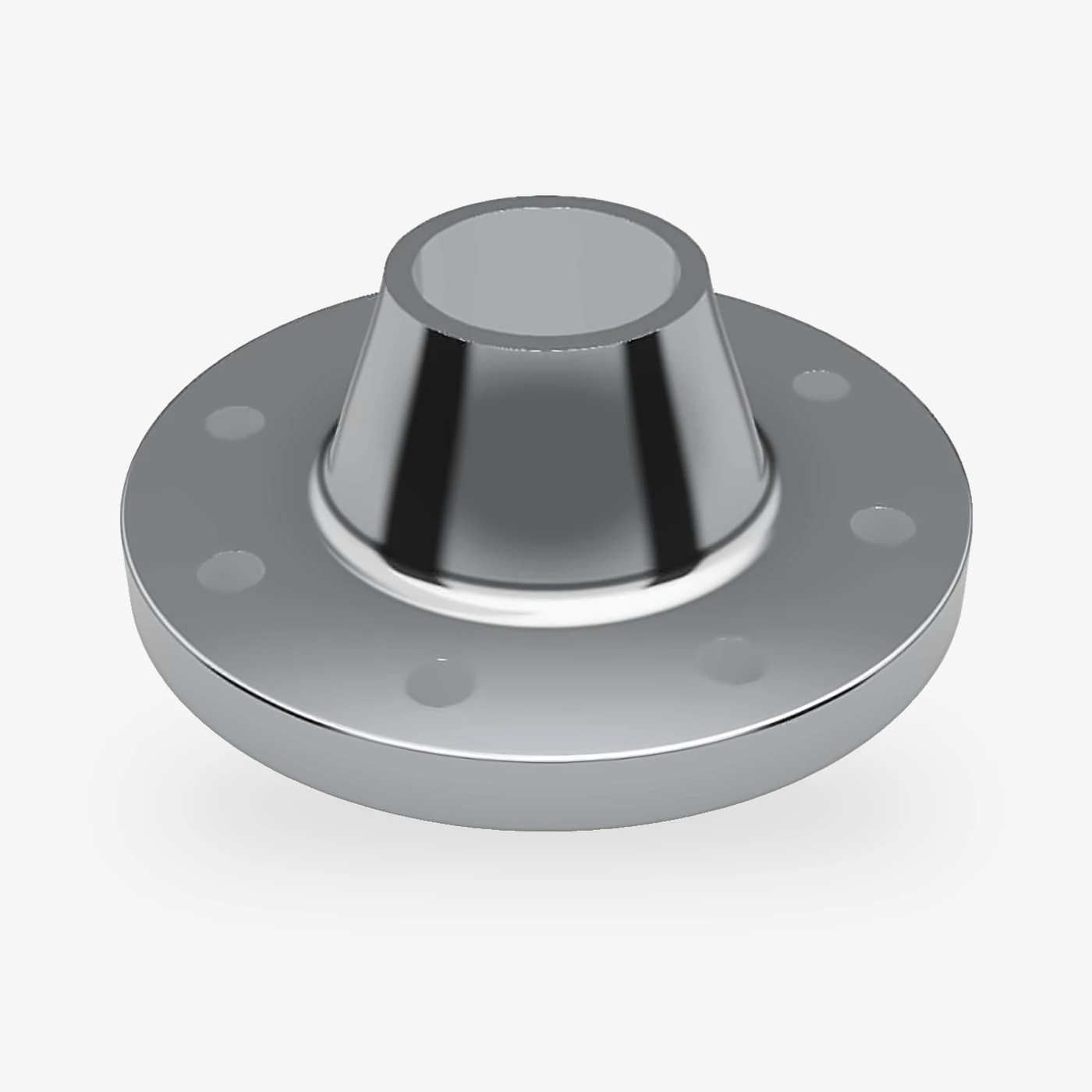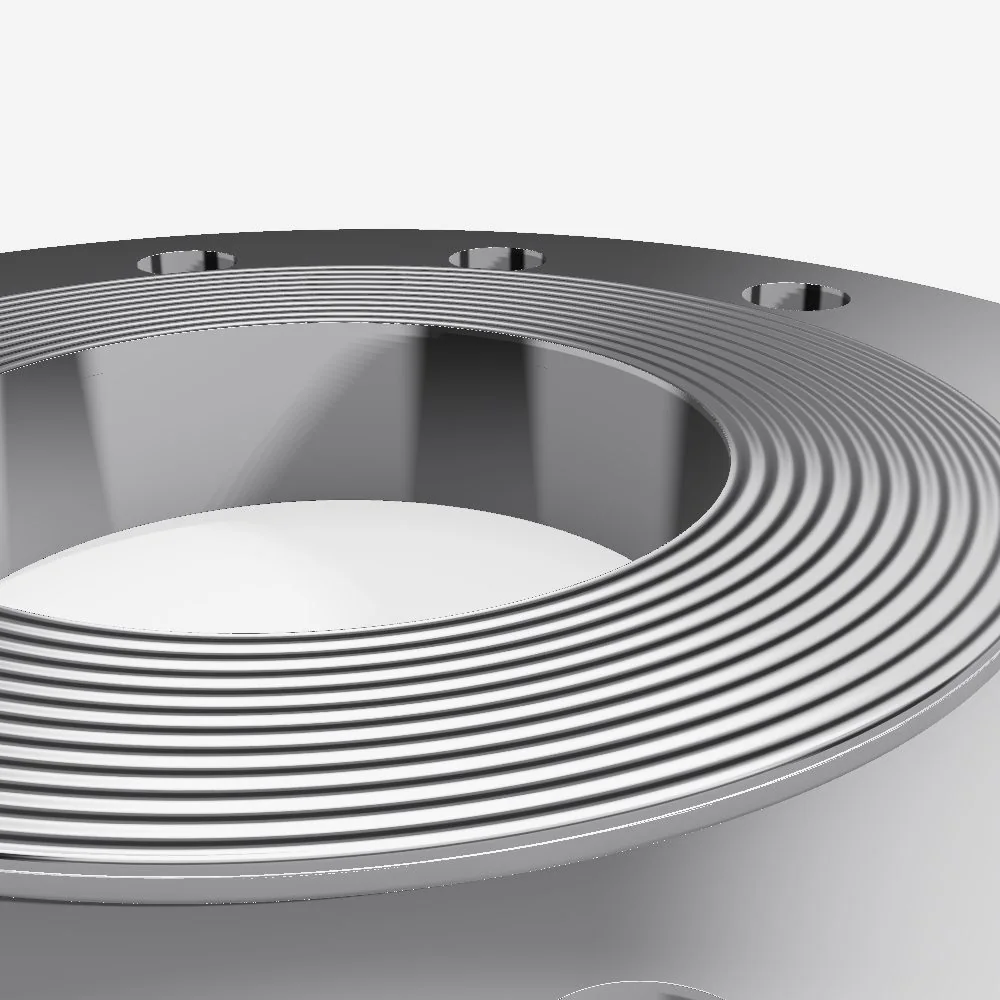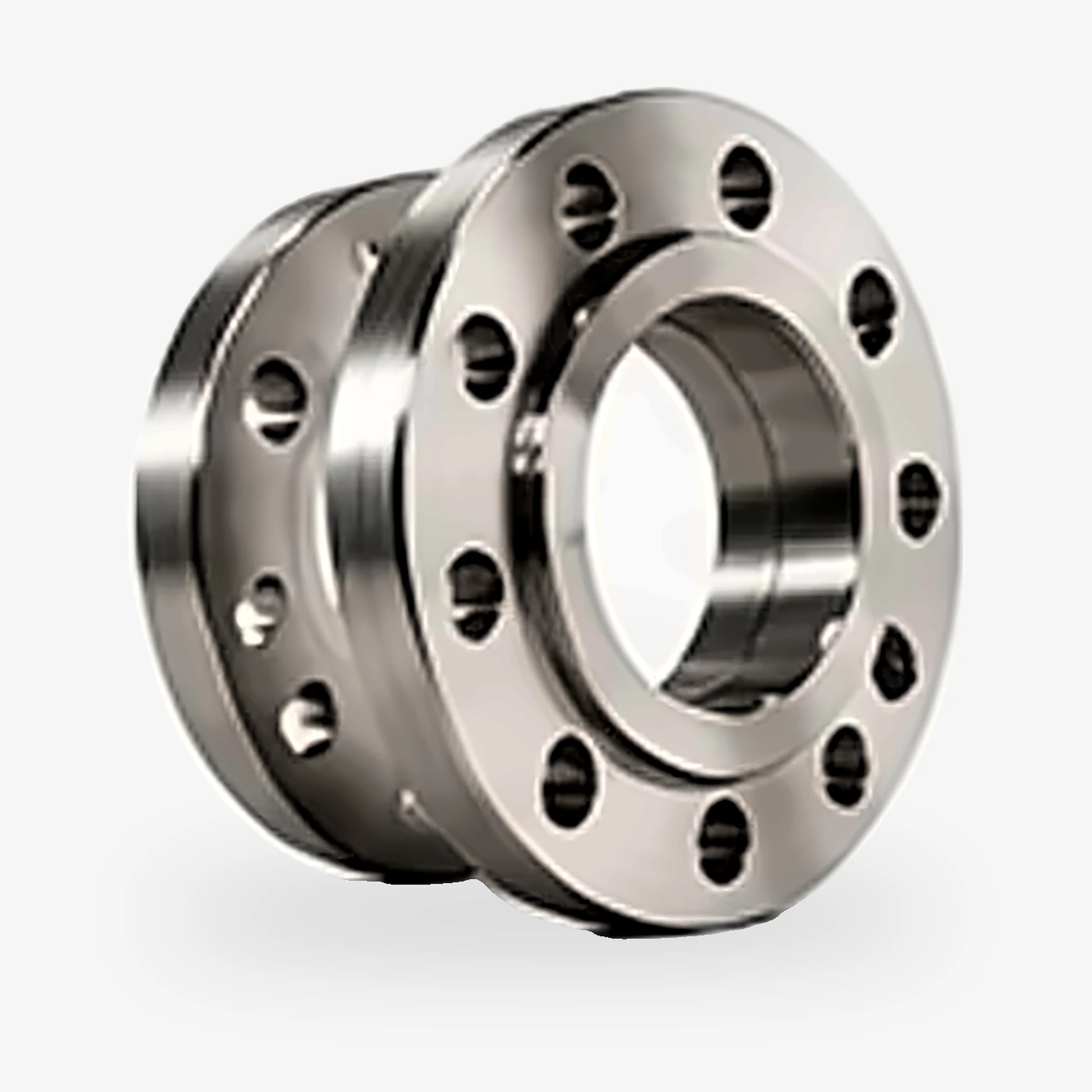
Weld neck and slip-on flanges look similar once they're bolted up. Inside the joint they behave very differently.
Weld neck
A weld neck flange has a long tapered hub that is butt-welded to the pipe. The taper spreads stress smoothly from the flange into the pipe wall, and the butt weld can be fully radiographed.
- Best for high pressure, high temperature and cyclic service.
- Bore is matched to the pipe schedule, so flow is smooth.
- Costs more and needs accurate pipe cutting and fit-up.
Slip-on
A slip-on flange slides over the pipe and is fillet-welded inside and outside. It's quicker to align and cheaper to buy.
- Good for lower-pressure utility, water and air lines.
- Easier fit-up on site.
- Lower fatigue life — roughly a third of an equivalent weld neck in many references.
Quick rule
Critical or hot service: weld neck. Utility service with tight budgets and easy access: slip-on.
Whichever you choose, specify the bore or schedule clearly on the order — it's the most common reason flanges are rejected at site.
TE
Teshi Engineering Team
Writing from the Teshi engineering team in India — on flanges, fittings and the work of building to spec.